On Political Disobedience, Violent but Civil

This is a post by Andrei Bespalov (Pompeu Fabra University).

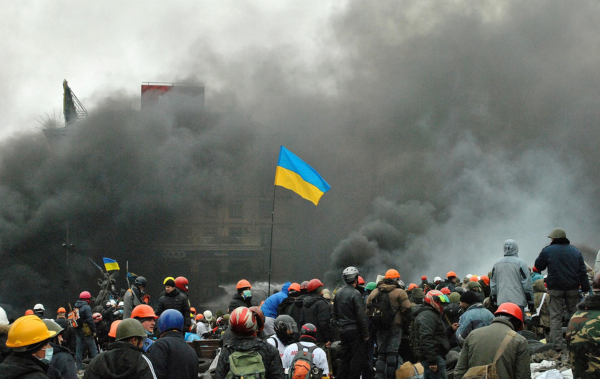
Political liberals put great value in political autonomy, which, in their view, makes it necessary for citizens to justify their preferred political decisions and actions to one another on the grounds of reasons that all of them may reasonably be expected to accept. Under the conditions of deep moral, religious, and philosophical disagreements, these proper public reasons should not rely on comprehensive doctrines that define what makes human life good as a whole. Instead, they should only draw on common sense, uncontroversial science, and liberal political conceptions of justice, such as John Rawls’s justice as fairness.
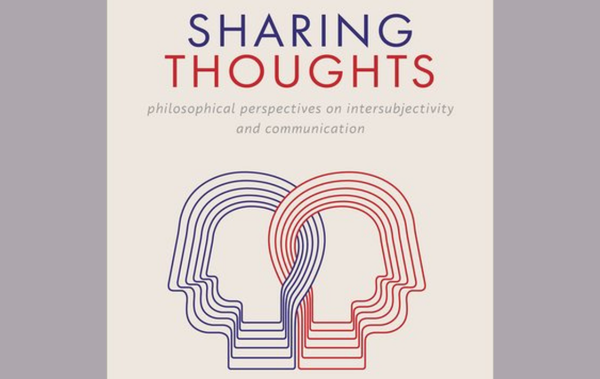
Review of Sharing Thoughts (eds. José Luis Bermúdez, Matheus Valente, and Víctor M. Verdejo)

This is a post by Valentine Simpson (University of Valencia).

You would be blameless for believing that a thought is a shareable thing. Indeed, it seems that subjects do a lot of thinking together, that they regularly exchange thoughts in communicating with each other, and that much (if not all) of what we accomplish as a society owes to our ability to pass information on to one another, in the form of my getting you to think that which I also think. Plausibly, this capacity is underpinned by our further sharing of a public language, with words and meanings that are also common to all.

When Private Law Makes You Poor, Can Public Law Save You?

This is a post by Diego M. Papayannis (University of Girona).

Most lawyers would agree that private law is not supposed to be distributively fair. It is, after all, the area of law in which we are allowed to act in our own best interests, provided we do not wrong others in the process. So, when someone points out that private law is insensitive to pre-existing social inequalities, and that it actively generates new ones, the most frequent response is to gesture toward welfare programmes: that is what they are there for. But is this good enough? Does it meet the requirements of justice?

When Judges Say “You Must”: What Are They Really Doing?

This is a post by Federico Arena (University of Girona).

Imagine a judge delivering a verdict: “The State is obligated to provide healthcare to this patient.” We take this kind of statement for granted. But have you ever stopped to wonder what the judge is actually doing when they say this? Are they describing a fact about the world — the way you might say “It’s raining outside”? Or are they doing something entirely different?

Two Grounding Recipes for the New Physicalist

This is a post by Marcelino Botín (University of Barcelona) and Markel Kortabarria (University of Barcelona)

Consciousness is a rare beast. It is the aspect of reality with which we are most intimately acquainted, yet itremains strikingly resistant to scientific characterization. Classic thought experiments such as Mary in the black-and-white room suggest that one can possess complete scientific knowledge about the brain and still lack knowledge of what consciousness really is.

Reclaiming the Label ‘Autistic’

This is a post by Bianca Cepollaro (Vita-Salute San Raffaele University), Marta Jorba (Pompeu Fabra University), Valentina Petrolini (University of Bologna).

Designed by Freepik

The word ‘autistic’ has recently been reclaimed, especially within neurodiversity movements. We can observe how it is used with pride in political slogans (e.g., “I am autistic and I am proud”), online communities (e.g., r/AutisticPride on Reddit, whose description reads: “a bunch of proud autistic folks”; #autisticpride hashtag on X), blog posts (e.g., “Autistic as a reclaimed word”), popular articles, and activism.

Derogation, Common Ground, and Why We Disagree

This is a post by Teresa Marques (University of Barcelona).

Consider how ordinary speakers argue about words like charnego, gitano, or negrito. In some contexts their use is taken to be straightforwardly degrading; in others it is defended as neutral, affectionate, or at least nonderogatory. These disagreements are familiar and often heated. They pose a natural philosophical question: what, exactly, makes a term derogatory, and how should we understand cases in which competent speakers sincerely disagree about whether a word counts as a slur at all?

Assessing the Linguistic Data on Hedged Assertions

This is a post by Dario Mortini (University of Barcelona).

Simple ‘outright’ assertions serve a wide range of familiar communicative purposes in our daily lives: from giving directions (‘The Sagrada Familia is up that street to the right’) to sharing novel and interesting facts about the world (‘The new bakery in the neighbourhood sells apple cake’). However, we are not always well-positioned to make outright assertions. When uncertainty looms, we must settle for something weaker.

Tort and the Demands of Interpersonal Justice: A Reply to Professor Papayannis

This is a post by Gregory C. Keating (USC Gould School of Law).

In his excellent blog post Does Tort Law Really Care About You?, Diego Papayannis addresses a fundamental question of tort law and challenges my view of the matter as he understands it from my book Reasonableness and Risk (OUP 2022). The role of the law of torts is to secure us against harm at each other’s hands as we go about our lives in civil society. How then should the law of torts respond to unavoidable harm?

Ignorance Isn’t a Failure

This is a post by Oscar Piedrahita (University of Barcelona).

You’re mowing your lawn when your neighbor strolls over and asks, “Do you know how many blades of grass you’ve just cut?” You’d naturally answer no. But if they then say “So you’re ignorant of that fact?”, this second question would feel  stilted, perhaps even misplaced. Is this something you’re supposed to know? Of course you don’t know the count, but calling you ignorant of that trivial detail sounds like an unwarranted criticism.