
What Is This Thing Called Propaganda?

Image attribution: Christopher Michel, CC BY 2.0 https://creativecommons.org/licenses/by/2.0, via Wikimedia Commons.

This is a post by Constant Bonard (University of Bern), Filippo Contesi (University of Cagliari) and Teresa Marques (University of Barcelona).

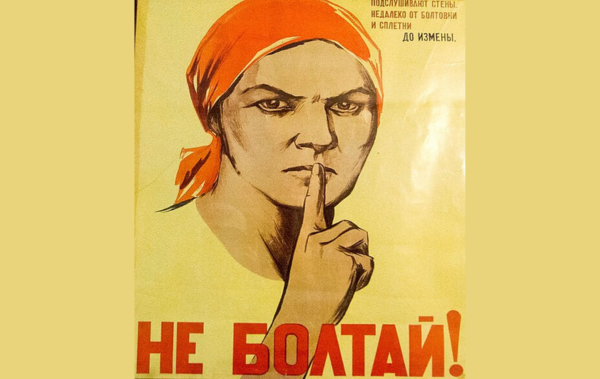
Propaganda is so ubiquitous a phenomenon in contemporary societies of all types that there would seem to be no problem in us understanding what it is. Still, we apparently continue to fall for it so often that perhaps we are not very good at recognizing it. It may be because we don’t really understand what propaganda is. Can the philosophical debate about how to define propaganda provide any help?


Francesc Pereña, 1947 – 2025

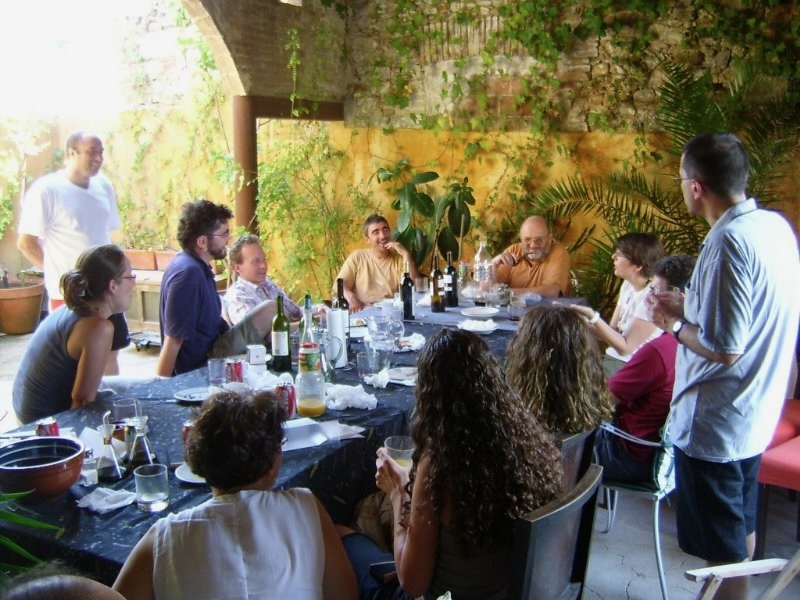
This photo was taken in July 2006. Francesc (sitting at the head of the table) is surrounded by friends and colleagues from LOGOS.

This is a post by Manuel García-Carpintero (University of Barcelona).

Francesc Pereña, a founding member of LOGOS and key contributor to its success, died on February 16 after a long and cruel illness.

Francesc got his PhD at the University of Barcelona in 1987 under the supervision of Emilio Lledó, with a dissertation on Schelling’s views on freedom that he had conceived during a four-year stay in Heidelberg, mentored by H. G. Gadamer. He worked mostly on the philosophy of the 19th-century German philosophers Fichte and Schelling, and on the phenomenology of Husserl and Heidegger.


Controlling the Narrative: The Epistemology of Himpathy in Sexual Assault Trials

This is a post by Margherita Grassi (University of Barcelona) and Eleonora Volta (Vita-Salute San Raffaele University).

Article 111 of the Italian Constitution establishes that every trial must be conducted before a third and impartial judge and under conditions of equality between the parties. That means the judge must sentence based on the law, considering the facts and evidence presented during the trial, and without letting any opinion or prejudice about the parties influence their judgment.
In cases of gender-based violence, however, this required impartiality sometimes fails to be put into practice.


Must There Be Something Fundamental?

This is a post by Markel Kortabarria (University of Barcelona).

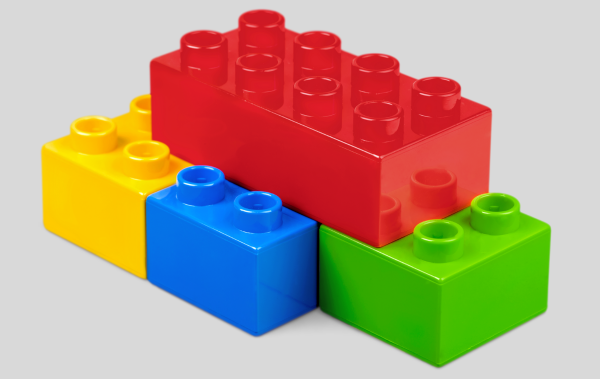
It is a commonsense belief that reality is built from the ground up. At its base lie the fundamental building blocks that serve as a foundation for everything else. This belief is largely shaped by the dominant scientific view in physics, which suggest that every object is made up of fundamental particles. Philosophically, the view is reminiscent of the ancient atomism of Leucippus and Democritus, as well as Leibniz’s theory of monads—simple, indivisible substances that form the foundation of every other substance.

Is More Diversity Better for Public Reason?

This is a post by Andrei Bespalov (Pompeu Fabra University).

In liberal democracies, citizens must respect one another as free and equal partners in self-government. According to public reason liberals, the idea of civic respect entails that policies can be enforced by the state only if they are reasonably justified to all citizens. But what should count as a reasonable justification in a public whose members disagree with one another on the basic matters of morality, philosophy, and religion?

Stereotypes, Access to Justice and the Masking of Individuality

This is a post by Federico Arena (University of Girona).

When someone utter stereotypes like “Girls are not good at mathematics” or “Mapuches are usually drunk” we intuitively sense something wrong with what has been said. The reasons for the negative evaluation of stereotypes are linked to the varieties of harms that they may cause to the stereotyped people. Indeed, such statements often express inaccurate beliefs that are the result of the imposition to certain groups of discriminatory social relationships and inegalitarian hierarchies.

Epistemically Fundamental Sources of Self-Identification

This is a post by Manuel García-Carpintero (University of Barcelona).

Consider simple subject-predicate claims about ourselves such as “I once was in Athens”, made on the basis of watching what I take to be a photograph of myself in Athens. The claim might be wrong for all kind of reasons; say, that the photo has been tampered with, and it is not Athens what it shows. Now, developing suggestions by Wittgenstein, S. Shoemaker advanced a notion that he labeled Immunity to Error through Misidentification, to contrast the relatively low epistemic standing of a self-ascription like this with most of the more standard cases in which we refer to and make judgments about ourselves.

Falsity and Retraction: New Experimental Data on Epistemic Modals

This is a post by Teresa Marques (University of Barcelona).

Imagine the following scenario: My husband and I go to the supermarket. When we get home, we bring the shopping bags from the car to the kitchen and as we start to put things away in the fridge, I notice that the eggs are missing. I wonder if we left them in the car. And so, I ask my husband for the car keys, to which he replies:
– The keys might be on the table.
He says ‘might’ because he is not completely certain if they are on the table, in his backpack, or in the pocket of his jacket.

Who’s Afraid of (Objective) Taste?

This is a post by Filippo Contesi (University of Milan), Enrico Terrone (University of Genoa), Marta Campdelacreu (University of Barcelona) and Genoveva Martí (ICREA, University of Barcelona).

If we had a penny for every time we hear the saying “Beauty is in the eye of the beholder”… Since at least the 18th century, philosophers and common people alike have pondered the question of whether or not the proverb is true. Some have answered one way, others the other. However, philosophers have typically agreed that, in general, people often claim that the proverb is true and that our aesthetic preferences are indeed a matter of individual or subjective taste.

Who Should Vote at Work?

This is a post by Iñigo González-Ricoy (University of Barcelona) and Pablo Magaña (Pompeu Fabra University).

If you have ever wondered why you have a say over who gets elected to your city council, your children’s school board, or the parliament of your country but not to the board of the company you work for, then you are not alone. In recent years, lawmakers across the political spectrum, from Elizabeth Warren to Theresa May, international institutions, from the European Parliament to the International Labour Organization, and workers in Europe, the Americas, and elsewhere have entertained similar thoughts.