This is a post by Andrei Bespalov (Pompeu Fabra University).
Political liberals put great value in political autonomy, which, in their view, makes it necessary for citizens to justify their preferred political decisions and actions to one another on the grounds of reasons that all of them may reasonably be expected to accept. Under the conditions of deep moral, religious, and philosophical disagreements, these proper public reasons should not rely on comprehensive doctrines that define what makes human life good as a whole. Instead, they should only draw on common sense, uncontroversial science, and liberal political conceptions of justice, such as John Rawls’s justice as fairness.
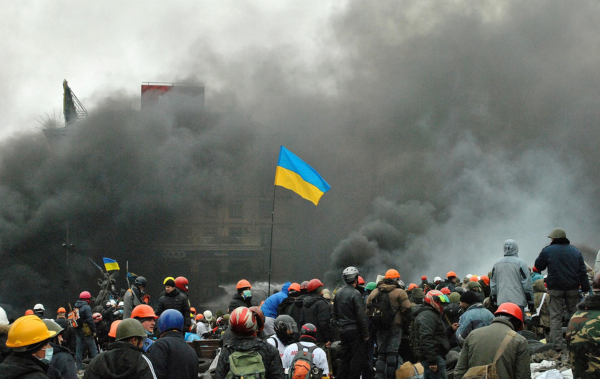
On one interpretation, this Rawlsian duty of civility does not only limit the kinds of reasons that citizens can use in public justification, but it also puts restrictions on the means that citizens can use to pursue their political goals in general. Specifically, civility prohibits disruptive and violent tactics of political disobedience, such as occupation of public spaces, roadblocks, destruction of property, and clashing with police. The apparent problem with using these non-deliberative means of influencing public officials is that it jeopardizes the officials’ political autonomy.
As political liberals explain, individuals are politically autonomous when they do not merely comply with the principles of justice out of self-interest or fear, but when their political decisions are motivated by sincere willingness to act from those principles as just. However, there is a significant risk that political decisions made by public officials in response to disruptive and violent protest will be motivated by the fear of further disruption and violence, and not by their belief in the justice of the protesters’ demands.
This interpretation of Rawlsian civility poses a problem for victims of severe injustice. If civility requires them to refrain from disruption and violence, it contributes to perpetuating the injustice. In response, liberal theorists of political disobedience acknowledge that the requirement to refrain from disruptive and violent political protest against severe injustice would be too idealistic. They concede that the oppressed should be relieved of the duty of civility, “uncivil” political disobedience can sometimes be justified.
I do not think it is a worthwhile concession. The main reason for my dissatisfaction is that, by calling all acts of disruptive and violent political disobedience “uncivil,” we concede the notion of civility to the kind of pro-establishment demagoguery that hypocritically invokes the ideal of good citizenship to accuse all militant protesters of disrespecting their fellow citizens, public authorities, and the rule of law. By acknowledging the allegedly “uncivil” nature of all disruptive and violent political action, we make it too easy for public officials to pretend that they do not have any other legitimate options but to reject the demands of the disobedients and punish them to the full extent of the law.
But is not it true that engaging in disruptive and violent political disobedience is simply incompatible with being a good liberal democratic citizen? How can disruption and violence in order to advance one’s political demands be reconciled with the Rawlsian duty of civility? How can these non-deliberative, openly coercive tactics be compatible with maintaining the political autonomy of all citizens, including public officials?
My reply is that being politically autonomous does not exclude being subject to coercion, it only excludes being subject to coercion that cannot be reasonably justified to you. Therefore, coercive forms of political disobedience are civil when they are justified on the grounds of reasons that all citizens may reasonably be expected to accept, or for short, when they are publicly justified.
It is not particularly difficult to show that subjecting individuals to coercion does not undermine their political autonomy when coercion is publicly justified. By justifying their preferred laws on the grounds of liberal political principles of justice, citizens persuade their compatriots to act from those principles as just. By enforcing the laws justified on the grounds of liberal political principles of justice, citizens coerce their compatriots to comply with said principles, when their compatriots fail to act from them as just. If, in their relations with one another, citizens were motivated solely by their sense of justice, they would have followed publicly justified laws without the enforcement. So, the enforcement of publicly justified laws does not prevent citizens from acting on their sense of justice, therefore, such enforcement does not undermine their political autonomy.
A similar case can be made for publicly justified disruptive disobedience. By justifying their demands on the grounds of liberal political principles of justice, the protesters persuade public officials to act from those principles as just. By resorting to disruption and violence, the protesters coerce public officials to comply with said principles, when public officials fail to act from them as just. If the decisions of public officials were motivated solely by their sense of justice, they would have met the publicly justified demands addressed to them without the pressure exerted by the acts of political disobedience. Given that publicly justified disobedience does not prevent the officials from acting on their sense of justice, it does not undermine their political autonomy.
To generalize, political liberals are entitled to maintain that all and only publicly justified political disobedience is civil, even when it is disruptive and violent. To make this position more concrete, we can say that an act of political disobedience is publicly justified iff it is aimed at defending citizens against the violations of liberal political principles of justice and it meets the constraints familiar from theories of defensive harm — namely, it is necessary, proportionate, and it does not target those individuals and institutions who do not culpably contribute to the injustices that the disobedients are fighting against.
Admittedly, for some this proposal may sound like “stretching the concept of civil disobedience beyond recognition.” How does it fit with Rawls’s seminal conception, where civil disobedience is, apparently, non-violent by definition? How does it fit with the meaning of “civility” in the ordinary language, where it refers to much more than the commitment to public justification? Anyway, I suggest multiple necessary conditions for publicly justified disobedience — is there at least one real-life example of disobedient action that met them all?
If you are curious about how I answer these questions, check out my open access article “Reasonable Disobedience,” which has just been published in the Journal of Social Philosophy.
My work on this article has been supported by María de Maeztu Unit of Excellence grant CEX2021-001169-M (funded by MICIU/AEI/10.13039/501100011033).
Andrei Bespalov is a Postdoctoral Fellow at Pompeu Fabra University working in the Law and Philosophy group in the Department of Law. He specializes in political philosophy with the focus on theories of public reason and their policy applications. The overall purpose of his research is to develop a minimalist conception of political liberalism that will be less morally and epistemically demanding than the standard Rawlsian one.

