
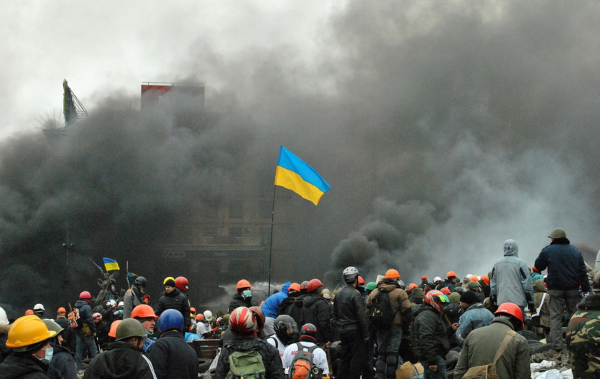
On Political Disobedience, Violent but Civil

This is a post by Andrei Bespalov (Pompeu Fabra University).

Political liberals put great value in political autonomy, which, in their view, makes it necessary for citizens to justify their preferred political decisions and actions to one another on the grounds of reasons that all of them may reasonably be expected to accept. Under the conditions of deep moral, religious, and philosophical disagreements, these proper public reasons should not rely on comprehensive doctrines that define what makes human life good as a whole. Instead, they should only draw on common sense, uncontroversial science, and liberal political conceptions of justice, such as John Rawls’s justice as fairness.

Review of Sharing Thoughts (eds. José Luis Bermúdez, Matheus Valente, and Víctor M. Verdejo)

This is a post by Valentine Simpson (University of Valencia).

You would be blameless for believing that a thought is a shareable thing. Indeed, it seems that subjects do a lot of thinking together, that they regularly exchange thoughts in communicating with each other, and that much (if not all) of what we accomplish as a society owes to our ability to pass information on to one another, in the form of my getting you to think that which I also think. Plausibly, this capacity is underpinned by our further sharing of a public language, with words and meanings that are also common to all.